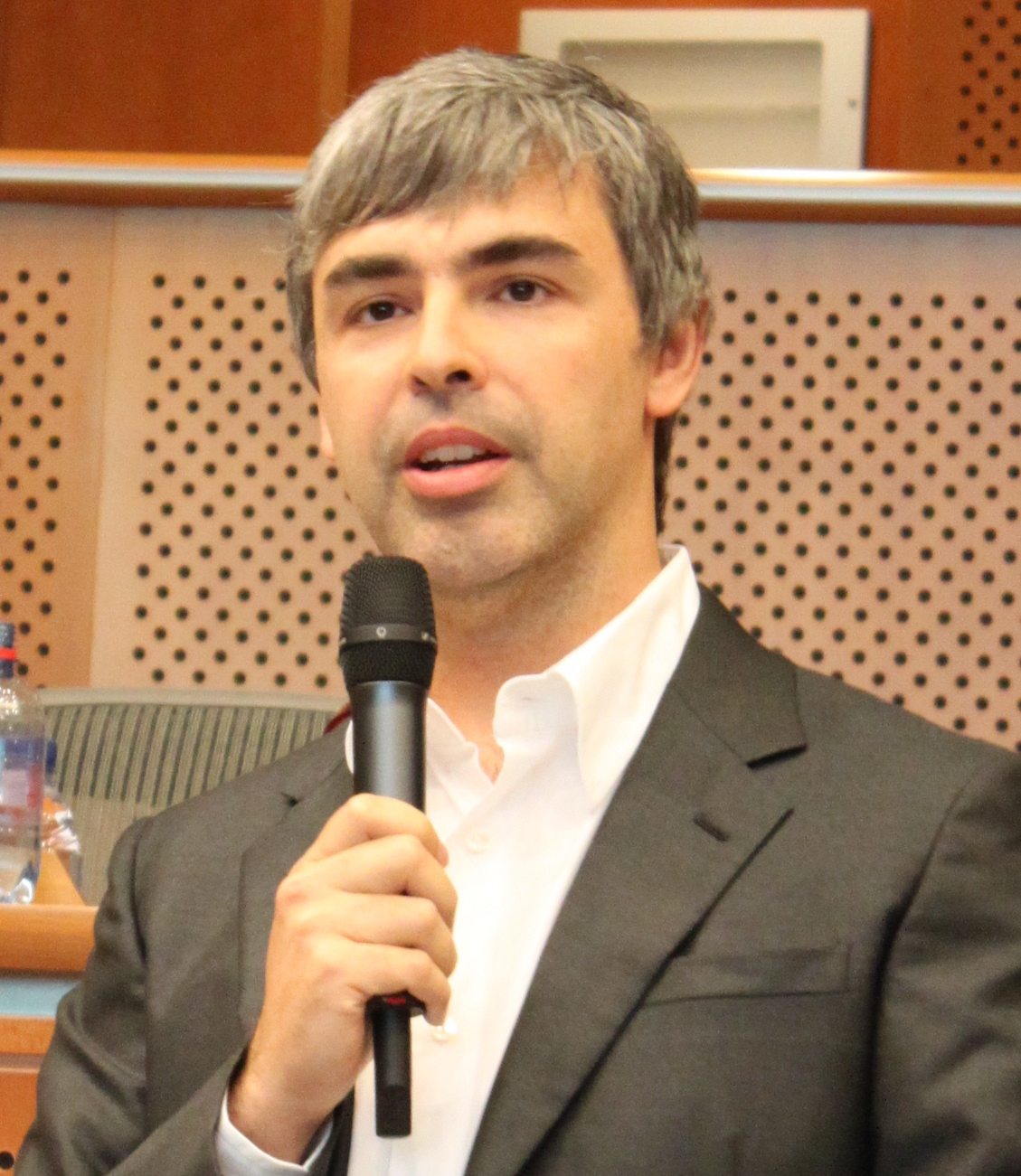
Larry Page Net Worth: Unpacking the $269 Billion Fortune of Google's Visionary Co-Founder
When the conversation turns to the titans of the digital age and their staggering wealth, one name consistently stands out: Larry Page. While some might be curious about the "larry clark net worth" or other figures in the business world, it's the story of Larry Page's monumental fortune and his pivotal role in co-founding Google that truly captivates. As a centibillionaire and consistently ranked among the world's richest individuals, Page's journey from a Stanford Ph.D. student to a technology luminary with an estimated net worth of US$269 billion (as of 2026, according to Bloomberg Billionaires Index and Forbes) is nothing short of extraordinary.
Born Lawrence Edward Page on March 26, 1973, this American businessman and computer scientist, alongside Sergey Brin, didn't just create a company; they fundamentally reshaped how the world accesses information. His incredible wealth is a testament to the immense value and pervasive influence of the search engine giant he helped bring to life. This article delves deep into the fascinating trajectory of Larry Page, exploring the innovations, leadership roles, and strategic decisions that paved his path to becoming the second-richest person on the planet.
The Genesis of a Giant: From PageRank to Google's Dominance
The foundation of Larry Page's immense wealth, and indeed Google's very existence, lies in a revolutionary concept born from academic research: PageRank. Co-created by Page and Brin, this sophisticated search ranking algorithm was designed to analyze the relationships between websites, determining their importance based on the number and quality of links pointing to them. Unlike previous search engines that merely matched keywords, PageRank introduced an element of qualitative analysis, leading to vastly superior search results. This innovation was so profound that it earned Page (and Brin) the prestigious Marconi Prize in 2004, often referred to as the Nobel Prize for information technology.
The initial idea for Google emerged from their research project at Stanford University, dubbed "BackRub." They envisioned an internet where information was not just indexed, but intelligently organized. This vision quickly blossomed into Google Inc., officially incorporated in September 1998. The genius of PageRank provided Google with a distinct competitive advantage, allowing it to quickly outpace rivals and become the world's most popular search engine. This early technological superiority, coupled with a commitment to continuous innovation, laid the groundwork for the exponential growth that would define Google for decades to come.
Practical takeaway: The story of PageRank underscores the power of a truly innovative idea. For aspiring entrepreneurs, it highlights the importance of solving a fundamental problem in a novel and effective way. Page and Brin didn't just create a better mousetrap; they built a better way to find *all* the mousetraps.
Navigating Leadership: Larry Page's Shifting Roles at Google and Alphabet
Larry Page's journey to a $269 billion net worth is inextricably linked to his dynamic leadership roles within the company he co-founded. His tenure as CEO saw several distinct phases, each marked by strategic decisions that contributed to Google's expansion and, consequently, his personal wealth.
*
First Stint as Google CEO (1997-August 2001): Page initially served as CEO from the company's early days, guiding its formation and initial growth. During this period, Google solidified its search dominance and began exploring early advertising models.
*
Transition and Growth (August 2001-April 2011): Recognizing the need for experienced corporate leadership as Google scaled, Page stepped down, and Eric Schmidt took over as CEO. This decade saw Google's IPO, rapid product diversification (Gmail, Google Maps, Android), and explosive growth, cementing its status as a global technology giant. Page remained deeply involved, serving as President of Products, fostering innovation and maintaining strategic oversight.
*
Return as Google CEO (April 2011-July 2015): Page reclaimed the CEO position, signaling a renewed focus on innovation and faster execution. During this period, Google acquired Motorola Mobility and made significant strides in artificial intelligence, self-driving cars, and other "moonshot" projects, setting the stage for future ventures.
*
Architecting Alphabet Inc. (July 2015-December 2019): In a move that fundamentally restructured the company, Page became the CEO of the newly formed parent organization, Alphabet Inc. This strategic reorganization allowed Google's core businesses to operate more efficiently while providing a framework for ambitious, diverse ventures (like Waymo and Verily) to thrive independently. This period solidified his vision for a diversified tech conglomerate. This phase is a crucial part of
Larry Page's Google Journey: From CEO to $269 Billion Fortune, demonstrating his strategic foresight.
*
Stepping Down from Day-to-Day (December 4, 2019-Present): Page, alongside Brin, stepped down from all executive positions and daily roles within Alphabet. However, his influence remains profound. He continues to serve as an Alphabet board member, an employee, and, crucially, a controlling shareholder. This enduring stake in one of the world's most valuable companies is the primary driver of his continued immense wealth.
His strategic decision-making, particularly the creation of Alphabet, showcased a long-term vision beyond just a search engine company. It demonstrated a willingness to experiment, decentralize, and invest in potentially transformative technologies, which continue to drive significant value for shareholders.
The Enduring Legacy of a Centibillionaire and Future Outlook
Larry Page's $269 billion net worth isn't just a number; it represents the culmination of relentless innovation, strategic leadership, and an unwavering belief in the power of information and technology. His legacy extends far beyond financial figures. He co-created a company that transformed the internet, making information universally accessible and fundamentally changing human behavior.
His status as a centibillionaire is primarily derived from his substantial ownership stake in Alphabet Inc. Even after stepping down from active daily management, his shares continue to appreciate, fueled by Alphabet's sustained growth across search, cloud computing, artificial intelligence, and numerous other ventures. His role as a controlling shareholder means his strategic influence, while perhaps less hands-on, remains a vital part of the company's direction.
For those looking at
Larry Page's $269 Billion Legacy: After Google and Alphabet CEO, it's clear that his impact resonates far beyond his direct involvement. His entrepreneurial spirit and long-term vision offer valuable lessons:
*
Embrace Bold Ideas: Don't be afraid to pursue ambitious projects, even if they seem unconventional. Google's "moonshot" factory, X, is a prime example.
*
Focus on User Experience: From PageRank onwards, Google's success has always been rooted in providing superior user experience.
*
Strategic Evolution: Companies, like individuals, must evolve. Page's willingness to restructure Google into Alphabet demonstrated a crucial adaptability.
*
Long-Term Vision: Building generational wealth and impact requires thinking decades ahead, not just quarters.
In conclusion, Larry Page's journey from a graduate student with a groundbreaking idea to one of the world's wealthiest individuals is a powerful narrative of entrepreneurial success. His estimated $269 billion net worth is not merely a reflection of financial accumulation, but a testament to the profound and lasting impact of his innovations, his leadership, and his enduring vision for the future of technology. While the specifics of "larry clark net worth" might be a point of curiosity for some, it's the towering figure of Larry Page and his indelible mark on the digital landscape that truly defines the pinnacle of modern technological achievement and immense personal fortune.