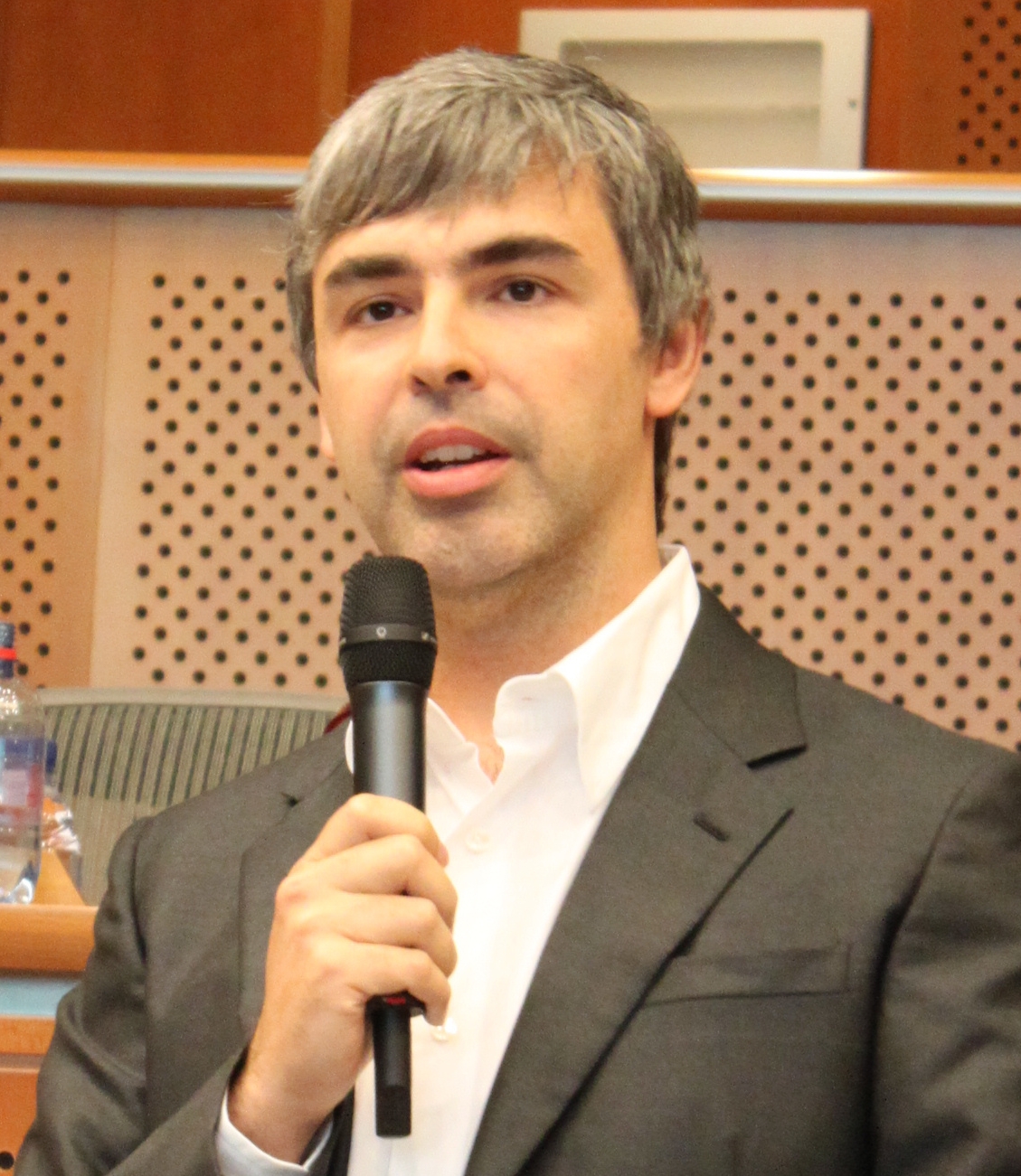
Larry Page's $269 Billion Legacy: After Google and Alphabet CEO
In the expansive world of technology and entrepreneurship, the names of visionaries often become synonymous with their groundbreaking creations. When inquiring about the colossal fortunes amassed by such figures, search queries like "larry clark net worth" might arise, seeking to unravel the financial standing of various influential individuals named Larry. However, this article specifically delves into the remarkable financial journey and profound legacy of Larry Page, the visionary co-founder of Google and its parent company, Alphabet Inc. Page's estimated net worth, a staggering US$269 billion as of 2026, positions him as one of the wealthiest people on the planet and underscores the transformative power of his contributions to the digital age. Beyond the astronomical figures, Page's career illustrates a relentless pursuit of innovation, strategic leadership, and an enduring impact that continues to shape how we interact with information and technology.
From Stanford Dream to Global Domination: The Genesis of Google
Lawrence Edward Page, born on March 26, 1973, embarked on a path that would redefine information access. His journey began at Stanford University, where, during his Ph.D. studies in computer science, he crossed paths with Sergey Brin. Together, they conceived an idea that would revolutionize the nascent internet: a superior method for ranking search results. This concept, born from academic research, would evolve into what we know today as PageRank.
PageRank was a pivotal innovation. Unlike earlier search engines that relied on keyword density, Page and Brin's algorithm analyzed the relationships between websites, essentially judging a page's importance by the number and quality of other pages linking to it. This breakthrough provided far more relevant and reliable search results, quickly differentiating their project, initially dubbed "BackRub," from competitors. This deep dive into the mechanics of search demonstrates an early commitment to providing real value to users, a philosophy that would underpin Google's success.
In 1998, Google Inc. was officially founded, emerging from a garage in Menlo Park, California. Larry Page served as its inaugural chief executive officer from 1997 until August 2001. During this foundational period, Page's visionary leadership instilled a culture of innovation and ambitious "moonshot" thinking. His early tenure set the stage for Google's rapid expansion, moving beyond mere search to develop a suite of products and services designed to organize the world's information and make it universally accessible and useful. This entrepreneurial spirit, focused on solving complex problems with cutting-edge technology, remains a defining characteristic of Page's legacy.
Navigating Leadership: CEO of Google and Alphabet
Larry Page's leadership trajectory at Google was dynamic and marked by strategic evolution. After his initial stint as CEO, he stepped aside in August 2001, making way for seasoned executive Eric Schmidt. This move allowed Page and Brin to focus more intensely on product development and engineering, honing Google's core offerings and exploring new frontiers. It demonstrated a pragmatic understanding that scaling a rapidly growing company sometimes requires bringing in external expertise, a valuable lesson for any entrepreneur.
A decade later, in April 2011, Page returned to the helm as Google's CEO. His second tenure was characterized by a renewed focus on product integration and accelerating innovation, particularly in areas like mobile technology (Android's continued growth), artificial intelligence, and ambitious long-term projects. He streamlined decision-making processes and pushed for greater cohesion across Google's vast ecosystem. This period saw the company make significant strides in expanding its global footprint and diversifying its revenue streams.
However, perhaps Page's most impactful strategic move came in July 2015 with the restructuring of Google under a new parent company, Alphabet Inc. Page transitioned to become the CEO of Alphabet, a bold move designed to decentralize the sprawling empire. This restructuring created distinct segments for Google's core businesses (search, advertising, YouTube, Android, Chrome) and its more experimental ventures (like Waymo for self-driving cars, Verily for life sciences, and Loon for internet balloons). The creation of Alphabet was a masterclass in corporate governance, allowing disparate parts of the company to operate with greater autonomy and fostering innovation in diverse, often high-risk, areas while maintaining transparency for investors.
Page held the CEO position at Alphabet until December 4, 2019, when he and Brin famously stepped down from all executive positions and day-to-day roles. While relinquishing operational control, Page remains an Alphabet board member, a key employee, and, crucially, a controlling shareholder, cementing his influence over the company's long-term direction. His journey from student innovator to CEO of a global tech giant, and then to a strategic oversight role, offers a fascinating case study in evolving leadership within a rapidly changing industry. For a deeper dive into his career journey, see Larry Page's Google Journey: From CEO to $269 Billion Fortune.
Larry Page's Astronomical Fortune: Unpacking $269 Billion
The financial success stemming from Larry Page's vision is nothing short of extraordinary. According to the Bloomberg Billionaires Index and Forbes, as of 2026, Page's estimated net worth stands at an astonishing US$269 billion. This puts him firmly among the world's centibillionaires and ranks him as the second-richest individual globally, a testament to the unparalleled value created by Google and Alphabet.
The primary source of Page's immense wealth is his significant ownership stake in Alphabet Inc. As a co-founder and controlling shareholder, his shares have appreciated exponentially as Google's services have become indispensable to billions worldwide. The diversification into various "Other Bets" under Alphabet has also contributed to this valuation, signaling potential for future growth even beyond the core Google services. This fortune is not just a reflection of financial acumen but a direct outcome of building products and services that have fundamentally changed how society functions.
When considering figures like Larry Page Net Worth: How Google Co-Founder Reached $269 Billion, it's important to understand the scale. A fortune of $269 billion is not merely wealth; it's a measure of the economic impact and technological leverage a single individual's ideas can generate. It represents decades of continuous innovation, strategic risk-taking, and the successful scaling of revolutionary concepts into global ecosystems. The sheer magnitude of this fortune places him in an exclusive club, alongside a handful of individuals who have profoundly shaped industries and economies.
The Legacy Beyond the Billions: Innovation and Impact
While his net worth often grabs headlines, Larry Page's true legacy lies in his profound and lasting impact on technology and human civilization. His co-creation of PageRank not only built Google but fundamentally altered how information is organized and retrieved on the internet, setting a new standard for search engine effectiveness. This foundational algorithm continues to influence how we discover content, learn, and make decisions online.
Under his leadership, Google evolved from a search engine into a multifaceted tech behemoth responsible for many of the tools we use daily:
- Android: The world's most popular mobile operating system, bringing smartphone technology to billions.
- Chrome: A dominant web browser that has shaped internet access and experience.
- YouTube: Acquired and scaled into the premier platform for video content.
- Google Maps: Revolutionizing navigation and location-based services.
- AI and Machine Learning: Investments that have propelled advancements in various fields, from voice assistants to predictive analytics.
- "Moonshot" Projects: Through Alphabet's "Other Bets," Page championed audacious projects like self-driving cars (Waymo) and life sciences research (Verily), pushing the boundaries of what technology can achieve.
Page's philosophy has consistently leaned towards challenging the status quo and thinking big. His willingness to invest in seemingly outlandish projects, even with high risks of failure, has fostered a culture of innovation that few companies can replicate. This long-term vision, often prioritized over short-term gains, is a crucial insight for aspiring innovators: true disruptive change often requires patience and an appetite for grand challenges.
Even after stepping down from day-to-day operations, Page's influence persists. As a board member and controlling shareholder, his strategic input continues to guide Alphabet's direction, ensuring that the company remains true to its founding principles of innovation and impact. His contribution is not just about the products created, but the mindset instilled – a relentless pursuit of solving humanity's grand challenges through technological breakthroughs.
Larry Page's journey is a powerful narrative of how a brilliant idea, coupled with unwavering vision and strategic leadership, can transform the world and generate unprecedented wealth. From a Stanford dorm room to the helm of a $269 billion empire, his legacy is one of continuous innovation, global connectivity, and a steadfast belief in technology's power to better human lives. As he continues to influence Alphabet from his position as a controlling shareholder and board member, the reverberations of his initial dream will undoubtedly continue to shape the future for generations to come, reminding us that true value often comes from daring to organize the world's information.
